
Difference Between Short Run and Long Run
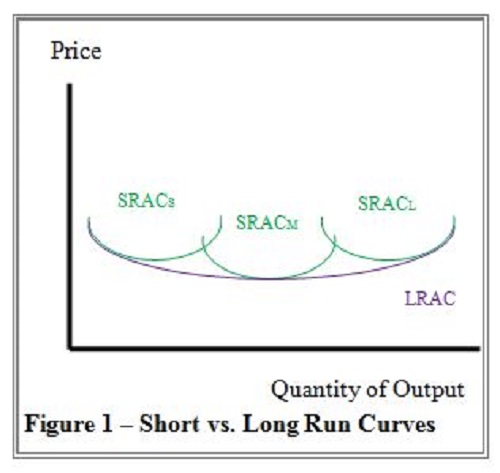
Short Run vs. Long Run
“Short run” and “long run” are two types of time-based parameters or conceptual time periods that used in many disciplines and applications. The most prominent application of these two terms is in the study of economics.
The meanings of both “short run” and “long run” are relative. A short run can be any period of time ranging from a couple of weeks to months or even a year. On the other hand, a long run can also span over the same period of time depending on the company and the set parameters.
In economics, a short run and a long run are used as reference time approaches. Various economic concepts like supply, demand, input, costs, and other variables are set into either a short run or a long run to predict or examine changes from one timeframe to another or from one variable to another. “Long run” and “short run” can also predict future operations of the company, especially in times of loss. This ability to predict or presuppose allows the company the opportunity to strategize, recover losses, prevent bankruptcy, and closure.
In economics, a short run characterizes the time when one factor of production is fixed and another factor is variable. In this situation, the factors haven’t fully adjusted to the operations schedule and economic situations.
The limitation of time also contributes to the limitation to stabilize or change some of the variables or factors in the business. For a business, the short run is a good period to increase raw materials or labor since these variables can be easily accomplished in comparison to other factors of production. Companies in this period of time are in the status quo. There are no new competitors or new companies, but there are also no companies getting out of the industry.
In contrast, the short run period includes no fixed factors of production or all factors are variable. In addition, the business has fully adjusted to the operating schedule, activities, as well as economic situation. The long run is also considered a time for re-evaluating and assessing the company. A long run implies stability and continuity; the business can expand by acquiring more capital or increasing production for more profit. Another scenario can include competition in the industry.
In terms of the industry, “long run” provides free access to the entrance and exit of companies. New companies can enter the industry in the market, while bankrupt businesses can exit without restriction.
Summary:
1.“Short run” and “long run” are the two expressed parameters of time in economics. It is not a specific period of time but rather more of an estimation. In economics, it is present in many contexts, models, theories, and approaches. The definition of “short run” and “long run” differs from one company to another.
2.Both terms refer to the period of time where are all factors of production are both fixed and varied or all varied. A short run is a period of time characterized by some fixed and variable factors. In a sense, it is an “adjustment period” because time and effort are limited. Since factors are stilted, a limited number of factors like the amount of raw materials or personnel can be changed or manipulated.
3.Meanwhile, a long run means that the factors are all varied and the “adjustment period” is over. The business can now initiate expansion activities or competition.
4.Another difference is the state of the industry in these two periods. In a short run, companies cannot enter or exit an industry, while the long run period has more flexibility; companies shave excess to go in or out depending on their development and progress.
- Differences Between Fraternity And Sorority - January 8, 2014
- Differences Between Lucite and Plastic - January 7, 2014
- Differences Between Oil and Butter - January 6, 2014
Search DifferenceBetween.net :
 Email This Post
: If you like this article or our site. Please spread the word. Share it with your friends/family.
Email This Post
: If you like this article or our site. Please spread the word. Share it with your friends/family.
Leave a Response
References :
[0]https://econ651spring2009.wikispaces.com/Production%2C+Total+cost+including+implicit+and+explicit+costs.+Average+cost+%28long+run+and+short+run%29.+Average+variable+cost%2C+marginal+cost%2C+sunk+cost.+%28Include+coverage+from+chapters+2-6+of+Science+of+Success%29

