
Difference Between Yield & Coupon Rate
Yield vs. Coupon Rate
Banking and finance terms can be confusing at times, especially when someone has very limited or no experience with a seemingly endless list of financial industry terms. Some words are frequently used together, which alters their meaning altogether. This is the case when using the terms ‘yield rate’ and ‘coupon rate,’ two terms commonly encountered when purchasing and managing bonds. In finance, their combined usage translates into the concept ‘a higher coupon rate means higher yield.’ Other than their usage regarding bonds, these two terms are quite different from one another.
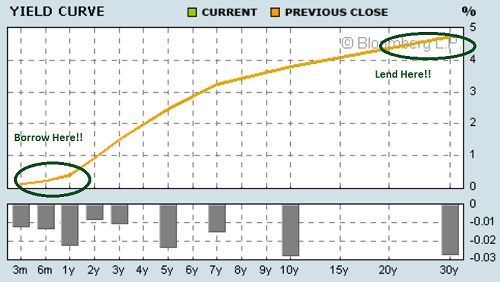
For the purposes of this article, a business and finance definition for yield rate is the interest earned by the lender on monies loaned, which is expressed as a percentage of the total investment. Yield rate is determined by the amount returned to the lender of a security. The yield of a bond is influenced by the price the buyer pays to purchase it. Intuitively, buyers prefer bonds that are sold at lower prices, because they have a higher yield. A higher coupon rate renders higher yield because the bond will pay a higher percentage of its face value as interest each year. Aside from price and coupon rate, yield rate is also affected by the number of years remaining till maturity, as well as the difference between its face value and current price.
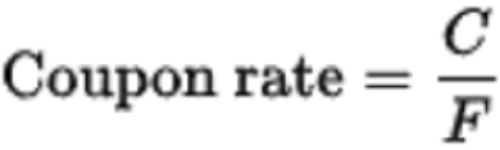
Conversely, the coupon rate of a bond is the amount of interest paid annually, expressed as a percentage of the face value of the bond. In some instances, it is also called ‘coupon yield.’ The term ‘coupon’ is derived from the old practice of issuing bonds with detachable coupons. The coupons are presented to the issuer whenever a scheduled interest payment has to be collected. This straightforward practice is no longer in use these days; bonds are registered to automated systems and payment of interests is mostly performed through electronic transfer or by check.
To further understand how yield rate and coupon rate interplay with one another, here are a couple of examples. A bond with 5% annual interest likewise has a coupon rate of 5%. Applying these rates to a bond with a face value of $10,000 will return $10,500 (e.g., $10,000 + 5%) at the end of the fiscal year. In another example, a bond is purchased at $20,000 with a coupon worth $200. The coupon rate would be 1% (e.g., 200/20,000 * 100). There are instances where zero coupon bonds apply; in this case, the bond will yield no additional returns other than those coming from the difference of the purchase price and the actual value.
If a $10,000 bond has an average of 4% return each year, it would also have a yield rate of 4%. Thus, the yield rate would amount to $400, which is four percent of $10,000. Now, if a bond purchased at $20,000 produces a yield worth $400, then its yield rate is 2% (e.g., 400/20,000 * 100). Simply stated, the yield rate is directly correlated to the coupon rate of a bond. The higher the coupon bonds, the higher the yield.
Summary
1.Yield rate and coupon rate are financial terms commonly used when purchasing and managing bonds.
2.Yield rate is the interest earned by the buyer on the bond purchased, and is expressed as a percentage of the total investment. Coupon rate is the amount of interest derived every year, expressed as a percentage of the bond’s face value.
3.Yield rate and coupon rate are directly correlated. The higher the rate of coupon bonds, the higher the yield rate.
4.The average coupon rate gathered in a number of years determines the yield rate.
5.Aside from the coupon rate, yield is also influenced by price, the number of years remaining till maturity, and the difference between its face value and current price.
- Differences Between Fraternity And Sorority - January 8, 2014
- Differences Between Lucite and Plastic - January 7, 2014
- Differences Between Oil and Butter - January 6, 2014
Search DifferenceBetween.net :
 Email This Post
: If you like this article or our site. Please spread the word. Share it with your friends/family.
Email This Post
: If you like this article or our site. Please spread the word. Share it with your friends/family.
Leave a Response
References :
[0]https://professorpinch.wordpress.com/2010/02/20/credit-crunch-ver-2-0-in-beta-testing/
[1]https://en.wikipedia.org/wiki/Bond_valuation

