
Difference Between MHC and HLA
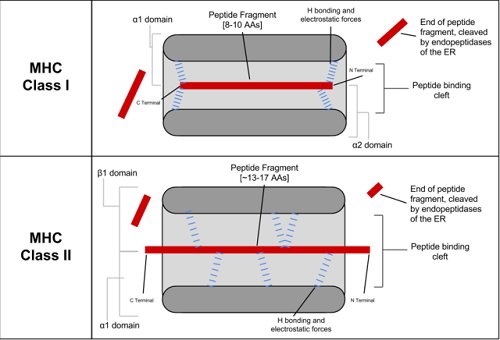
MHC vs. HLA
“MHC” stands for “major histocompatibility complex,” while “HLA” is the short version of “human leukocyte antigen.”
Both are groups of antigens or proteins found on the surface of cells and in the genetic makeup or DNA. Their functions are also very similar – they identify and prevent a foreign protein or cell from entering or spreading in an organism’s body. This often happens in coordination with the immune system, which attacks these foreign bodies. Both groups of proteins regulate the immune system itself as well as its response.
The main difference between the two groups is that MHC is often found in vertebrates, while HLA is only found in humans. To simplify, HLA is the human body’s version of MHC. Part of the responsibility of these antigens is to detect cells entering the body. Upon detection, cells are recognized as either local or foreign. Local cells carrying viruses and other harmful organisms are often identified and attacked. This is also true for foreign cells introduced to the body.
These antigens are often involved when an organ transplant is planned for an organism or a human being. Certain tests are carried out to determine the compatibility between an organ and a recipient’s body. Near perfect or perfect matches are desirable in these situations in order to lessen the risk of the recipient’s body rejecting the organ.
Aside from organ transplants, both MHC and HLA are very useful in strengthening a body and its immune system. In humans, the HLA is also used in paternity tests to determine the parentage of a child; this is done by comparing antigens from the child, father, and mother.
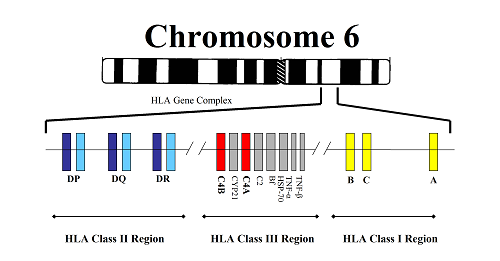
A disadvantage of MHC and HLA is that they carry certain hereditary diseases like cancer, diabetes, and lupus.
Both antigens are also responsible for preventing inbreeding or the state of excessive similar genetic material in a person. They favor diversity in the genetic makeup but, at the same time, are responsible for cooperation in terms of kin recognition, dual recognition, and transplant matching.
Both MHC and HLA have four classifications of antigens. However, only the first and second classes of antigens are responsible for identification and a response to any cell, whether local or foreign. Class I antigens deal with the destruction of foreign or infected local cells; this occurs in all types of cells except for red blood cells.
Meanwhile, class II antigens mediate specific immunization to the antigen. Class II antigens are found in B cells, macrophages, and antigen-presenting cells (APCs).
MHC and HLA both act as shields of defense and protection of an organism’s body.
Summary:
1.MHC and HLA are slightly different, but their functions are basically the same.
2.Both MHC and HLA are classified as proteins and antigens. They are both located in an organism’s cells and work hand-in-hand with the body’s immune system.
3.MHC is found in many vertebrates, while HLA is only found in humans; HLA is basically the human MHC.
4.Both MHC and HLA are identifiers of local and foreign cells in a body. Foreign and infected cells are attacked and immunized. MHC and HLA regulate the immune system and its responses.
5.These antigens play a key role in organ transplants; an organ can be rejected by the recipient’s body if its MHC or HLA is not a near or perfect match. Aside from immunization and histocompatibility, these antigens are also responsible for a body’s defense against foreign organisms.
6.Only two classes out of four are responsible for the body’s immunity responses.
7.HLA can be used in identifying a child’s father and can also function as a carrier of hereditary diseases. It also prevents inbreeding among people.
- Differences Between Fraternity And Sorority - January 8, 2014
- Differences Between Lucite and Plastic - January 7, 2014
- Differences Between Oil and Butter - January 6, 2014
Search DifferenceBetween.net :
 Email This Post
: If you like this article or our site. Please spread the word. Share it with your friends/family.
Email This Post
: If you like this article or our site. Please spread the word. Share it with your friends/family.
5 Comments
Leave a Response
References :
[0]https://en.wikipedia.org/wiki/Major_histocompatibility_complex
[1]https://www.intechopen.com/books/autism-a-neurodevelopmental-journey-from-genes-to-behaviour/immune-dysfunction-in-autism-spectrum-disorder


Really great article to make me understanding the different between both MHC and HLA, but it seems there’s a typing mistake.
Para 6, The APCs should be antigen-presenting cells indeed.
I think the answer confuses the new people studying immunology. The topic MHC VS HLA is ambiguous. Though there is some content on MHC it should have been made simple by saying that MHC of different vertebrates are given different names and human MHC is called HLA
This is a great article, it helped me with my schoolwork. Thanks
Great article, well written.
I know that you are trying to help undertanding, but this is totally wrong at the conceptual level.