
 Parody and Satire
Parody and satire are two words that often people get confused with. The difference between the two terms is very complex. It can sometimes be hard to make a distinction, as Satire and Parody are both related to humour.
Well, parody is just a mimicry of an established concept, idea, or a person and satire is something spoken in humour without reproducing the subject directly.
Satire can be said to be more subtle, which involves mockery but without mimicry. Parody on the other hand is just mimicry, only reflecting the actual subjects.
One of the major differences that can be noted between a parody and satire is in regard to their goals. Though both parody and satire conveys humour, they impart different roles in society. Satire is stands for a social or political change. It depicts an anger or frustration trying to make the subject palatable. Satire can be termed as humour and anger combined together. Parody is really meant for mocking and it may or may not incite the society. Parody is just pure entertainment and nothing else. It does not have a direct influence on the society.
While Satire makes a serious point through humour, Parody does not contain any thing serious. Parody is just fun for fun’s sake. Satire can induce the society to think where as parody does not. While satire stands for changing the society, parody only stands for fun and making fun.
Another difference seen is that while satire tempts one to indulge in thoughts through laughing, Parody just imparts laughing only. In Parody, the subject is imitated. A parody is not born if there is no specific target. But in satire there is no imitation.
Satire can stand alone without borrowing statements from any original work. Parody on the other hand does not stand alone and it depends on some original subject to mock.
Satire can be called as a surgery and parody as butchery. Satire can be painful but the cut does not bleed. But Parody cuts deep and imparts pain on the subject who is subjected to mockery.
While parody apes a movie, song, persons, characters, Satire has the society as the subject. When parody has a specific target, satire has a wider target.
Summary
1.Parody is just a mimicry of an established concept, idea, or a person and satire is something spoken in humour without reproducing the subject directly.
2.Satire is that stands for a social or political change. Parody is really meant for mocking and it may or may not incite the society.
This reminds me of words that are used to describe a person what a person does who mimics someone else — usually a celebrity — to convey humor. Perhaps this site should divine the differences between an “impersonation” and an “impression.” Related terms: mimicry, tribute.
Reply
Damn, this is a big help. thanks. i do a lot of photo shopping of images to create funny images, but i was confused about the satire/parody difference. Now i need someone to explain fair use to me.
Reply
The author of this article clearly doesn’t know what he is talking about. Parody can be used in service of satire. The distinction to be made is between non-sensical parody and satirical parody. This article is, excuse my language, a load of shit.
Reply
I had to reread the first sentence of the article a couple of times–because the site is what I would call clean and professional looking I did not start off expecting the semi-literate drool that flowed down the page–as I would have expected if the background had a busy pattern that did not tile correctly and the type was in (non-contrasting) magenta, all caps, comic sans, and center aligned.
“Parody and satire are two words that often people get confused with.” ….
Wow!
I was going to pull a few sentences as examples that desperately need editing, but after looking back with a more critical eye I feared nausea would overcome me if I continued to look at the sentences any longer.
Was this a high school students rough draft–a draft that was basically copied from another document, rewritten so that it did not look plagiarized? A draft using words with which the author seems to have only passing familiarity–used only to impress a reader rather than to effectively communicate. This last fault, unfortunately, often results from being rewarded for this style of writing in school.
Thank you.
I am looking forward to you* ripping me a new one.
*e.g. the original author, or someone else who will rip my criticism to shreds and effectively point to the many faults in my short note–a note that tears down but builds nothing. Faults of which I am of course oblivious–especially since I will fail to effectively proofread what I have written.
Reply
Little bit late on this post but if you are going to fault someone on a topic, you should atleast point something out rather than calling it a crock of shite and trolling about the internet. Just my opinion as you had yours.
Reply
Yes. The opening sentence is off-putting and semi-literate (according to what we are taught is standard English). Having many Googled choices, I almost skipped past this article, but I’ve learned to be very tolerant when I’m on the Internet. After all, English is a second language to most of the world’s netizens. Moreover, standard English is almost an untaught language in America’s public schools. It’s barely a requirement in our colleges and apparently is no longer necessary in business.
For most of us, the phrase “… words that people often get confused” sounds more proper than “… words that often people get confused with.” However, the rest of the article is good, It’s a worthwhile read. I overlook the mis-application of English grammar because it is simply indicative of Internet English on the whole.
Reply
You gotta comma splice there, It’s okay though.
Reply
I totally agree. The first sentence ending with a preposition was the first red flag; after “Though both parody and satire conveys humor…” and its egregious error of subject-verb agreement, I lost the will to live – or at least to continue reading this article. If one is going to write about language (0r any other topic for that matter), one should have some real knowledge of the subject at hand.
Reply
Or “People often get confused between the terms parody and satire”
I see the very close connection between the two in Spitting Image, for example. That’s satirical with parody used to emphasise the point, which in the case of that series, the parody becomes satire in itself.
Reply
Thank you John S.
Well said. To a great (excessive) degree I reacted negatively to what I saw as use of words that did not fit and were (probably?) used pretentiously (and unconsciously so).
I again started to pick examples to illustrate what I found so awful–I never called anything shite, that was an earlier commenter–and the examples extend throughout the piece (they are not just limited to the opening sentence). I again have given up on that since it would be tangential to what I was intending to say in this reply.
The writing is no worse than what I often heard and read while in graduate school or subsequently “in real life”.
Additionally, I think I (inappropriately) took personal/emotional offence at the sharp distinction drawn between parody and satire. It is my relatively unexamined belief that (assuming the definitions of satire and parody provided in the article) what one person calls parody another could easily call satire.
Thank you all for encouraging or stimulating (I would not say inducing) me to think more about the original question addressed and the ideas stirred up through the comments.
Read more: Difference Between Parody and Satire | Difference Between | Parody vs Satire http://www.differencebetween.net/miscellaneous/difference-between-parody-and-satire/#ixzz1uOTmPSuY–
Read more: Difference Between Parody and Satire | Difference Between | Parody vs Satire http://www.differencebetween.net/miscellaneous/difference-between-parody-and-satire/#ixzz1uOTMolhf, sentence construction,
Reply
Hey people,
Can someone tell me if this is correct, or true, excuse my words, true bullshit? I need this for highschool, but I don’t know what to believe now…
Help!
Thx,
Shybian
Reply
What bullshit!
Reply
Very unsatisfactory distinction as I try to understand Nabokov’s use of parody rather than satire. Parody is a means to other ends besides entertainment. I know the above interpretation isn’t well done, but where do I find something better I wonder. . .
Reply
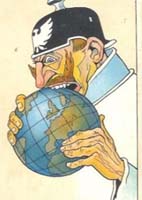
Wow that picture is extremely anti Semitic
Reply