
Difference Between CRNA and Anesthesiologist assistant
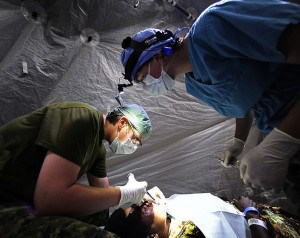 CRNA vs Anesthesiologist assistant
CRNA stands for Certified Registered Nurse Anesthetist and AA stands for Anesthesiologist Assistant. Students studying under any of these fields will be giving anesthesia but there is lot of difference in their posts and responsibilities.
A nurse assistant (CRNA) can work individually but an Anesthesiologist assistant (AA) always has to work under the guidance of an anesthesiologist. This is the chief difference between a CRNA and an AA. The study curriculum that they both follow is quite different too. A nurse assistant has to complete the degree of Bachelor of Science in Nursing (BSc Nursing). After completion of the degree one must have an authorized registration. Later on, one has to complete an internship consisting of one full year of training with full duties in the medical intensive care unit and the surgical intensive care unit. This makes the nurse assistant extremely experienced and fully capable of handling cases in the rural sectors also. Some of them may also finish M.Sc. in Nursing. The course length for both the career options is almost the same. Since CRNAs can work individually, they have a wide variety of work opportunities in large academic medical centers, hospitals, small units where pain management is taken care of, outpatient surgery clinics, etc. They have studies based on pediatric anesthesia also. Since they already have basic medical knowledge while doing their nursing studies, they do not need to be taught about basic anatomy, certain life saving procedures and maneuvers whereas anesthesiologist assistants are given all the pre-medical knowledge right from anatomy, physiology, pediatric life support, knowledge about drugs, about anesthesia etc during the course of becoming a certified AA.
An Anesthesiologist assistant is a non-physician who provides anesthesia but he has to work under the medical direction and supervision of an anesthesiologist. They can work in hospitals and clinics but they are a legal responsibility of the anesthesiologist. They are qualified by advance studies and clinical training so as to work in co-operation with anesthesiologist. Their study curriculum has the requirement of a Bachelor’s degree followed by an entrance exam which qualifies them for the Anesthesiologist assistant post. Once the qualification is done then they need to go through intensive study and clinical training both. After completing the required hours of study they can then work with the anesthesiologists as assistants. They have a lot of work like doing a general check up of the patient, taking blood samples for monitoring certain levels of gases in the body, evaluating the pre-op health status, confirming whether patient has been on drugs which were prescribed, also they need to give anesthesia either local or general and lastly they also have to take post operative rounds to keep a watch on the patient’s general health status. They are taught about basic life saving procedures and also the extra care needed to be taken in pediatric cases. One has to be extremely gentle in pediatric cases as rough handling of the cases might put their life in danger.
Salary scales are almost the same for both the fields excepting the variation which takes place from one state to another.
Summary:
We have got an overview of both the fields and the differences in the nature of work each of them performs. Nevertheless each field has its own importance. A CRNA can work individually while an AA is always an assistant to an anesthesiologist and cannot give anesthesia individually. Their pay scales differ minimally and the job profile of an AA is more extensive.
- Difference between near sightedness and far sightedness - January 21, 2015
- Difference between Diverticulosis and Diverticulitis - January 20, 2015
- Difference between Prilosec and Nexium - January 19, 2015
Search DifferenceBetween.net :
 Email This Post
: If you like this article or our site. Please spread the word. Share it with your friends/family.
Email This Post
: If you like this article or our site. Please spread the word. Share it with your friends/family.


I was reading your article on the difference between a CRNA and an AA and noticed that the 2nd paragraph begins with the words “nurse assistant”. Several sentences below that same phrase is repeated several more times. The CRNA is not a nurse assistant. I feel that you should have typed “nurse anesthetist” instead. A nurse assistant is a CNA, which is a Certified Nurse Assistant. They are in no way the same occupation.
Please re-read this article and make changes if necessary. Thank you.
Anybody reading this article needs more info. This is a poorly written article. First a CRNA is referred to as nurse assistant; they are not. A CRNA is nurse anesthetist which is an advanced nurse practitioner. And, the duties and scope of practice for CRNA’s is FAR GREATER than an AA – anesthesia assistant. And, pay is significantly greater for CRNA’s.
Alan, actually a CRNA is NOT a Nurse Practitioner either. They are considered APRN (Advanced Practice Registered Nurse). An NP & CRNA are both APRN, but different in their own right. Also, CRNA’s make a really decent amount of money. They are the highest paid in the APRN circle.
Alan, you are wholly incorrect, on both points. I know because I’m a nurse who worked along side a team of MDAs and CRNAs while employed by an anesthesia group for 10 years. I’m married to an AA who has been practicing as such for 11 years. His MDAs and surgeons many times, request him above any of the CRNAs in the practice.
As a CRNA, DNP who works in two trauma facilities in Miami, Florida (Ryder & Kendall Regional). I have never had an AA supersede me. They may ask your husband to do these tasks because he knows the group on the case, but a CRNA goes through more extensive training than an AA and often work cases independently. An AA is the similar to a PA, but an AA focuses on anesthesia, whereas a PA is universal, both are assistants to the doctor. a CRNA is not an assistant, at all.
of course, a wife will support their husband. Even stretch the truth. Your AA hubbie can never work as an independent provider and will always just be a helper.
Not true . The pay is the same. I can speak for Florida where there are a lot of AAs working in hospitals and surgery centers. I’m a CRNA and my daughter is an AA making exactly the same salary . I have 16 years experience and she has 9 years.
Seems like you also need more information, Alan. That said, I’m pretty sure you know what you were trying to do.
As an Anesthesiologist Assistant reading this, I would highly suggest for you to consider your sources, and therefore, bias in the above information.
I can’t help but to feel as though the information provided here about AAs is a bit diluted.
In order to get into AA school you need premedical background (advanced anatomy and physiology, advanced chemistries and biological sciences in addition to many hours of observation in the medical setting). After you get your bachelors and premedical requirements, you take your MCAT(same entrance exam as medical school), or now GRE for a few places(same exam required for CRNA school), and THEN go through AA school, which is just as rigorous as the curriculum is about the same; advanced airway management, anesthetic practice, anesthesia pharmacology, regional, obstetrics, pediatrics… the list goes on and on. The book list is exactly the same; my sister is a CRNA.
As a close relative of CVICU and PICU nurses, close friend to many CRNAs, nurses, and physicians I speak without spite when I say that you will quickly find that the one year of work experience in the ICU needed to apply for CRNA hardly qualifies anyone as an expert on anything, nor does it have any baring of your ability to perform anesthesia. Years performed in ANESTHESIA makes you more qualified. The only thing that can make you make you a true expert is having a doctorate of medicine, aka MD or DO with specialty of anesthesia and years in the practice. Also, not all ICUs are created equally in terms of the responsibilities that they give their nursing staff.
Many many studies confirm that it is not possible to tell the difference between a CRNA and an AA after the first year of practice.
To say that the scope and salary of a CRNA is far greater than an AA is archaic; perhaps that was the case in 2011, but not so much in 2019.
There are some places in anesthesia practice where CRNAs can do more, like private surgery centers, but where it counts it’s pretty much the same. Your quite safe with either putting you to sleep; someone highly educated and adept in the practice of anesthesia ☺️. Don’t be so easily fooled by politics, hearsay, and diction.
What are your licensing, credentialing and governing bodies. CRNAs have the AANA & the NBCRNA, which imposes guidelines for CEUs and recertifications. They also impose recertification exams. Are you subjected to the same types of time limited certifications.
Yes, AAs are subject to the same types of certifications. The NCCAA, as well as individual state medical boards regulate their practice.
bro, you will always just be a MD HELPER and not a full fledged independent provider like a CRNA. NICE TRY MED SCHOOL REJECT
Victoria, once again this article was poorly written, on more than one occasion they referred to CRNAS as nursing assistants ( great job of proof reading)
The minimum requirement for CRNA school is 1 year of critical care experience. But the actual average is over 2.5 years of experience. I like thousands of my colleagues work without MDAS. I have been a CRNA for 35 years and worked with an MDA maybe 5 of those years.
Please show me 1 of those ‘many many studies’ that state CRNAs and AAS are indistinguishable after the first year
I agree with you. I worked many types of ICU’s before CRNA school and it has benefited me greatly, 14 years. I moved to GA and lost about $60,000 a year in pay because you get paid same as the AA’s. The OR nurses told me when I started that they noted a difference in the care an AA gives and the CRNA’s. I’ve never come in contact with them before a year ago. The pay really bothers me. Hopefully I won’t be here long.
This was really good to read. I was so confused about which route to take. As your passage clarified both fields. I feel better about proceeding.
This article is very misleading… the anesthesia world really doesn’t care about being a Crna or and AA… the docs run the show… you need to build up your street cred and earn your respect no matter which program you come from… I’ve trained many aa and Crna students and they all are greens do don’t know shit, so this whole prerequisites crap doesn’t mean anything…. politics aside we are all doing a job as a mid level provider… if you choose to excel at the job it is up to you and your own motivation. I personally have worked level one trauma and level II trauma for six years and the shit I’ve seen will haunt your dreams… I’m a boss at what I do and I don’t give a fuck about being a Crna or an AA… I’m an anesthesia boss an I keep people alive… stick you bullshit politics up your ass and do so real anesthesia work.
Hello Advanced Practice Providers, CRNA/CAA
It truly saddened me to see how most CRNAs (Not All CRNAs are Anti-CAA) who are so brain washed and political driven (By the AANA) to undermine another anesthesia provider (CAA) who chose a different route in providing the same job as physician extender anesthetist (Certified Anesthesiologist Assistant) within the ACT Model.
I worked at a hospital whereas on staff there are a total of 75 Anesthetists –
72 CAAs/3 CRNAs. The Chief Anesthetist Is a CAA who oversees both anesthetists (CAA’s and CRNA’s).
The Cardiovascular Anesthesia Team comprise of 14 Anesthetists 13 CAAs/1 CRNA. Both anesthetists (CRNA/CAA) are phenomenal advanced providers.
CAA’s/CRNA’s both have autonomy when working within the ACT model and the cardiovascular team. The CAA’s and CRNA physically insert and float the PA Swan-Ganz Catheter and Central Line etc.
For the record, I worked at a former hospital whereas only CAA’s we’re allowed to do all cardiovascular cases. CRNAs we’re not allowed to do cardiovascular cases, only SAAs (Student Anesthesiologist Assistant) could do cardiovascular cases with the MD/CAA. SRNAs we’re not allowed to do cardiovascular cases.
Unfortunately, at this particular hospital a CAA would supersede a CRNA (Steve, DNP, CRNA) when it comes to cardiovascular cases, per request by the chief physician anesthesiologist and cardiovascular surgeon. A CAA goes through the same exact extensive training in the same manner of a CRNA.
CAA’s are trained in a “medical school environment and CRNAs are trained in a “nursing school environment. CAA’s are trained to think like physician anesthesiologists. CAA’s are trained extensively in performing high risk procedure cases such as cardiovascular, heart, liver, and lung transplant, trauma, neuro and ortho etc.
I happen to work with two R.N.s who practice as a CAA (RN, CAA) both worked in CVICU before applying to CAA program.
It speaks volumes when you have RRTs, ATs, Paramedics/EMTs, PA-Cs, DDS and RNs etc. all who have apply to CAA program and practice as a clinical anesthetist (”physician extender).
I have to agree with Aa Baller in regard to his comments, it’s how you approach in becoming the best clinical anesthetist in providing positive outcomes whether your a CRNA or CAA.
Kudos to Joan, CRNA and her daughter who is a CAA. Beautiful to see mother and daughter both practicing as anesthetists.
I work with a CAA who is married to a CRNA and a CRNA who is married to a CAA (Fact!).
In Closing, we must put aside the politics, and insults and focus on what’s important, that is patient first. I respect all anesthesia providers (MD/DO/CRNA/CAA) and we all should respect each others indifference and pathway he/she chose in regards to the philosophy of practicing anesthesia especially when it comes to CRNA vs CAA route in becoming an anesthetist.
I happen to work with some of the most outstanding physician anesthesiologists (MD/DO) and anesthetists (CRNA/CAA).
If I ever needed surgery I would not hesitate for 1 second to let a CAA put me under anesthesia. I work with my fellow CAA and I’ve seen the exceptional work that CAA’s do and its equal to any CRNA within the ACT. I have the utmost respect for CRNAs in the same manner as CAA’s.
I wish both CAA’s/CRNA’s all the best in your future endeavors in becoming a competent clinical anesthetist.