
Difference Between Electric field and Electric Potential
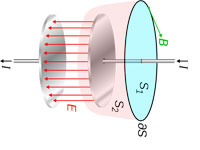 Electric field vs Electric potential
An electric field is present around a charge – either negative or positive. Any charged object can also acquire that field of electric force. A charge or a charged object has a force of whether to attract or repel a surrounding charge or object. Surrounding charges have also electric fields of their own with varying magnitude and this must also be taken into account.
The electric field is a force that acts between two charges and it is somewhat analogous to the gravitational field force that acts between two masses. The only difference is that gravitational force will be dependent on the values of masses while electric force will depend on the amount of charges on objects.
The formula for an electric field is as follows:
E = K * Q/d^2
Where:
K = constant
Q = charge in unit Coulomb (C)
d = distance between a charged object in unit meter (m)
Electric field is measured in Newtons per Coulomb which means that the field intensity of an Electric Field (E) is described as the amount of force (F) present for every coulomb of charge. The vector quantity can also be expressed in the unit of Volts per Meter.
Thus,
E = F/Q
This is a vector quantity that will either go in the direction of attraction or repulsion. It should be noted that a test charged should applied to get the Electric field intensity (E) of an object as there is no way to know how intense the field is, if it acts alone. In shorter terms, “It takes one to know one.”
The total amount of work to be done to move a charge from one place to another without causing any acceleration is what we call as the Electric Potential. The electric potential is the potential energy of a unit of charge that is associated with a static — time-invariant — electric field.
Mathematically, it is described as,
Ve = W/Q
The electric potential (Ve) is expressed in volts or Joules per Coulomb. Joules is the a unit of Work and as the formula shows, electric potential (Ve) is the amount of Work (W) per unit charge (Q). This quantity is scalar quantity which is often symbolized by a non-bolded V to represent its scalar property.
Summary:
1. Electric field is described as the amount of force per charge while the Electric potential is described as the amount of energy or work per charge.
2. Electric field is measured in Newtons per Coulomb or Volts per meter while Electric Potential is measured in unit Volts or Joules per Coulomb
3. Electric field is a vector quantity while Electric potential is a scalar quantity.
- Difference Between Lymphoma and Leukemia - March 7, 2024
- Difference Between CP and CPK - June 8, 2010
- Difference Between PPTP and L2TP - June 7, 2010
Search DifferenceBetween.net :
 Email This Post
: If you like this article or our site. Please spread the word. Share it with your friends/family.
Email This Post
: If you like this article or our site. Please spread the word. Share it with your friends/family.


Derive an expression for absolute electric potential U at point P in an electric field that is at a distance r from the source charge q.
Any one tell me how to solve this question
Hello Muqadus.
1 The problem asks us to imagine that there is an electric field somewhere created by one solitary charged particle of q Coulombs.
2. It requires us to compute the Electric Potential U, at a point P which is located at a distance of r from the source charge.
3. In order to compute the Absolute Potential U at point P, we have to imagine that we are dragging a test charge of 1 Coulomb all the way from a point located at a distance of infinity from the source charge q, upto point P which is located at a distance of r from source charge q.
4. We have to then arrive at the total work done in making this effort.
5. Work done is Force*Distance. By Coulomb’s law, if our test charge of 1 coulomb is located at a distance of R from the source charge q, then the force of repulsion on the test charge will be F=Kq/R^2, where k is the electrostatic constant = 9 x 10^9 (both the source charge and the test charge are positive).
6. Our problem is that when we drag our test charge towards Point P, since the distance of the test charge from the source charge R is continuously changing’ the value of force too is continuously changing.
7 We therefore have no choice but to separately compute the work done over every tiny step of the way, and sum up the forces we compute for each individual step. We need calculus.
8. Imagine that each ‘tiny step’ of ours has an infinitesimal length of dR, and that we are at some moment in time located at a distance of R from the source charge q.
9. The work done in moving the test charge over that tiny step will be Force*distance, which is equal to kq/R^2 * dR
10 If we integrate this quantity between the distance limits of infinity and r, we will get our answer.
11. Integrating kq/R^2 * dR gives us -kq/R
12. Computing this amount between the limits of R= infinity and R=r, we get -kq/infinity-(-kq/r) or Potential U=kQ/r.
That’s it.