
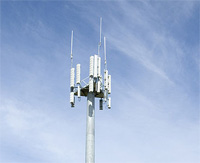
 Global Systems for Mobile Communications or GSM is the standard bearer of the 2G technologies. It is the most widely used technology in the world for mobile phone communications. GPRS is an upgrade over the basic features of GSM. It allows mobile handsets to obtain much higher data speeds than what standard GSM can offer.
GSM has served the world in mobile communications for more almost 2 decades and it has served its role very well. Although there have been some competing standards in the beginning, GSM has proven itself to be superior and other companies began to use the GSM standard. Unlike the first generation mobile phones, GSM was digitally switched; this made GSM more secure and a better platform for more features. One of the features that was introduced into GSM networks was the Short Messaging System (SMS) or more commonly known today as ‘text messages’. Text messaging had a very profound effect in society as it has become a very popular means of communication for the younger generation. Another feature is the capability to download content from the service provider. The content came in the form of ringtones, logos, and primitive picture messages that let the subscriber customize his phone to his liking.
As time passes by, the technology that was once new becomes a bit outdated and starts having trouble coping with the demand; GSM is no exception. In order to remedy the shortcomings of GSM, an improvement was added to the network called GPRS or General Packet Radio Service. GPRS was only an extension to the older GSM technology and did not need a revamp of the whole system. Because of that, GPRS was introduced flawlessly into the market and those who had GPRS compatible phones can avail of faster speeds. A feature that used GPRS technology was the Multimedia Messaging System or MMS. It allowed subscribers to send videos, pictures, or sound clips to each other just like text messages. GPRS also gave mobile phones the ability to surf the internet at dial-up speeds through WAP enabled sites.
Sometimes it is more cost effective to simply augment the existing system rather than completely creating a newer one. This is the case with GSM and GPRS. In order to extend the life span of the ageing GSM standard, GPRS was introduced along with its features and benefits. This allowed GSM to cope with the demand for more improvements. Despite the addition of GPRS, a technology gets to the point that it is so old that it needs to be replaced. Soon, 3G would replace 2G just as 2G replaced 1G.
- Difference Between Sony Cybershot S Series and W Series - December 22, 2012
- Difference Between Samsung Galaxy S3 and iPhone 5 - December 21, 2012
- Difference Between Samsung Galaxy S2 (Galaxy S II) and Galaxy S 4G - December 20, 2012
pls give differenciation with brief explanation
Reply
coulnt u understand this?.. k.. you can get those details from Wikipedia itself.. Actually, GSM(2G) is the one of the technique used in mobile previously. Now, the same GSM(2G) has been developed with GPRS technique as a advanced one…
however, this GSM is going to be replaced by 3G…
Reply
Guess he is just another guy in the xy plane of life. See no reason to decorate the political tombstone by Enga. Years of toolboys are over. Speak like a true Engan.
Sharkitz (675 72751276)
Reply
Yours was an equally useless explanation.
And we are here hoping better explanation than Wiki !
Got it kid ?
Reply
Thank you for the explanation !
Reply
great for the explanation,i have googled a lot of times and glad to find this amazing website.Great job you guys have done !
Reply
very useful info….
Reply
thank you
Reply
can u please explain difference between gsm modem and gsm mobile phone… ?
i want advantages of gsm mobile over gsm modem
Reply
I have learnt alot from you , so much good , please if possible you may send to me any of your networking documents so as to widening my understanding.
Reply
Thanks
Use full but not well expain I’m details.
Reply
Telecommunication
Reply