
Jews and Zoroastrians share a number of beliefs and features; to such an extent that some people find it difficult to differentiate the two. Despite these similarities, there are some very important factors that make the two different. To begin with, Jews follow the religion known as Judaism whereas the religion of Zoroastrians is Zoroastrianism.
The founder of Zoroastrianism was Zoroaster (Zarathustra Haechataspa) who lived from 660 to 583 BC in the area that is now part of western Iran although some claim that his birthplace is today’s Azerbaijan. The founders of Judaism include Abraham, Moses, Isaac and Jacob. In accordance with the most reliable sources, Judaism originated in The Levant whereas Zoroastrianism in Persia (modern day Iran).
The concept of deity is another ground on which the two religions are different. Jews believe in one God and also follow the teachings and traditions of their prophets and rabbis. The Zoroastrians, on the other hand, believe in one good God, who according to them, is in a cosmic battle with his counterpart, the evil God. They also refer to him as the Wise God. Apart from this concept, their beliefs in God also have some important differences. Whereas Zoroastrian just believe in one God, Jews go a step further in believing in one God who is the True Creator; he transcends life and death and has always existed and will always exist.
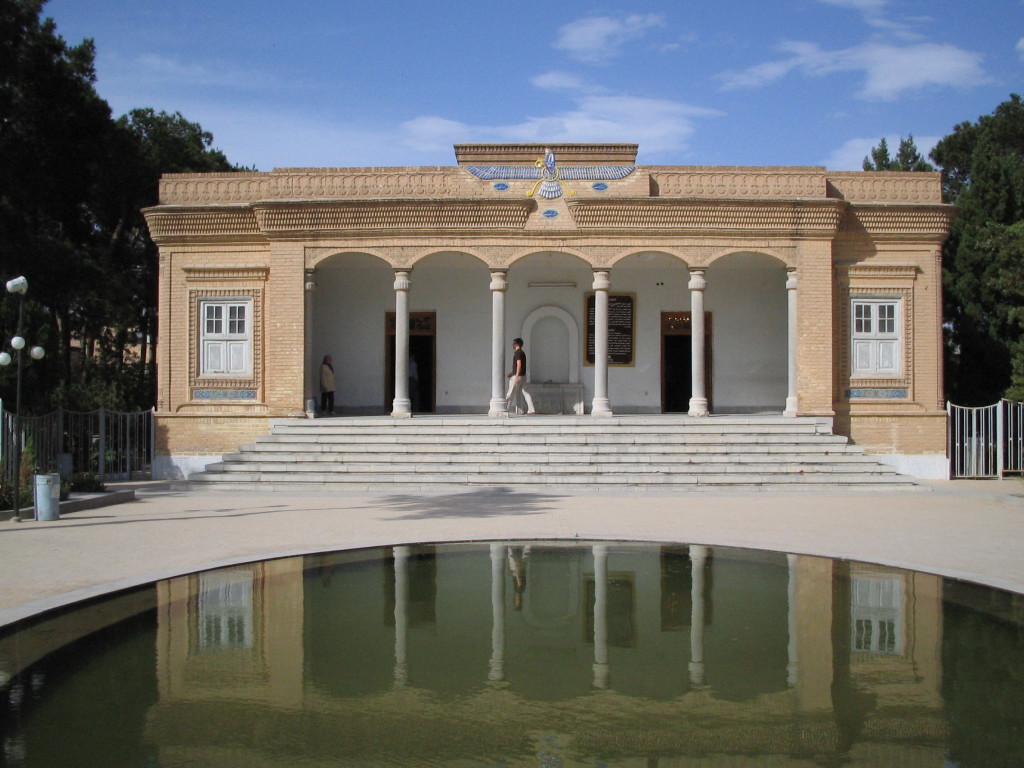
When it comes to prayers and practices, Jews pray 3 times a day with an additional prayer on Shabbat and on holidays. Their prayers include Shacarit in the morning, Mincha at noon, and then Arvit at night time. The extra Shabbat prayer is Musaf. Zoroastrians are quite distinctive in their religious practices; they worship fire. Therefore they are also sometimes referred to as ‘fire-worshippers’. In terms of prayers, they pray 5 times a day. The place of worship of Jews is called a synagogue. Their sacred place is the western Wall of the Temple located in Jerusalem. Zoroastrians pray in fire temples which are known as Dar-e-Mehr in Persian.
The use of statues and artwork is common to both religions. Zoroastrianism permits (and has always permitted) it an there are several drawings of the Prophet Zoroaster as well symbolic images of their God (Ahura Mazda). In Judaism, however, statues and pictures have been allowed in recent times; in the ancient times they were disallowed as it was considered Idolatry. There are statues of people to be found, but not as religious icons.
Every religion has a goal and a reason for being sent into this world. For Jews, it is to celebrate life and to fulfil the Covenant they have with God. They believe in doing good deeds, repairing the world, loving God with all your heart and promoting strong social justice and ethic. Zoroastrians also have similar goals of life along with trying to acquire and then cultivate divine attributes, walking on the righteous path, trying to elevate themselves in harmony with God and making their best effort to listen to the guiding voice of God within themselves.
A very important difference that cannot be left out is about the Holy book or scripture. The Tanakh (Jewish Bible) also referred to as The Torah is what the Jews follow whereas Zoroastrians follow The Zend Avesta.
Furthermore, Zoroastrians believe in an eternal life either in Heaven or in Hell. Their Jewish counterparts have different believes with some groups believing in Reincarnation whereas others believe in unification with God after death.
Summary of differences expressed in points
- Zoroastrianism-followers are Zoroastrians; Judaism-followers are Jews
- Founder; Isaac, Moses, Jacob and Abraham for Judaism; Zoroaster for Zoroastrianism
- Place of origin; Judaism-The Levant; Zoroastrianism-Persia (Iran)
- Zoroastrians believe in one Wise God who is in constant battle with another evil God; Jews believe in one God, prophets, rabbis; God is the True Creator, has always existed and will always exist
- Prayers; Jews pray three times a day; Zoroastrians pray five times a day; worship fire
- Jews pray in synagogues, Zoroastrians pray in fire temples
- Statues and artwork common to both religion but wasn’t allowed in ancient times in Judaism; portrayal of religious icons still not allowed
- Goal of life; to do good and promote ethic for Jews; these as well as making an effort to listen to the voice of God inside one’s own self- for Zoroastrians
- Scriptures- Jews-Torah, Zoroastrians- Zend Avesta
- Jews have various beliefs regarding life after death; reincarnation, unification with God etc.; Zoroastrians believe in the concept of Heaven and Hell
- The difference between Royal icing and Buttercream icing - March 22, 2015
- Difference between stuffed and deep dish pizza - March 21, 2015
- Difference between Crane and Heron - March 20, 2015
Please consider:
The Levant and Persia have intersections of the same places. Iran boundaries did not exist at that time. Pagans (anyone not of the same belief, and all their diverse beliefs) lived dispersed and together. No common religion existed as the vast majority could neither read nor write, and their dialect changed geographically over small areas.
I believe Zoraster was not a prophet, he was a philosopher. He related social common sense, and related that common sense to the foundations of the Universe as he knew it at that time. People chose to consider him a prophet, which put a spin on the original expressed ideas of Zoraster.
Zoroastrians loosely relate to a god, but do not live to provide glory to God glorification shows disrespect to God. Thinking and doing anything self-serving before serving everything else is considered disrespectful because we are the care takers of everything provided to us. The written foundation of broad ethical consideration.
Principles of Zoroastrianism (notice it is a sexist interpretation)
”
1) Each Zoroastrian must be good and beneficent in conduct towards all around him.
2) He cannot injure the interests of any man or living being.
3) Our speech has to be sweet and beneficial.
4) Goodness is Godliness and true Zoroastrian should be a ministering angel to all. God is so gracious in providing our needs without any expectation of a reward. So should we radiate goodness every moment of our life.
5) A Zoroastrian always tries to avoid unnecessary dissensions (Disagreement among those expected to cooperate) as he is asked to be “a bridge over a gulf dividing two sects”, by seeing the underlying unity, inspite of conflicting view points.
He is a peacemaker and would recognize some truth in every aspect of many-sided arguments.“ To see the other fellow’s viewpoint “ needs great tact.
6) A Zoroastrian should never force his own opinion on another, as there is freedom of conscience for each one of us. “Forced conversions” are Never successful or long lasting. Zoroaster’s very first sermon (Gatha 30) asks each one of the audience to use his or her “light of reason” and then formulate one’s own belief.
7) The Zoroastrian doctrine of self sacrifice enjoins all of us to consider the welfare of others before that of our own. We grow by giving and not by acquisitive greed. We are trustees of what we possess and should willingly share our gifts with others. Charity is a special virtue amongst the Parsis, because they think it their duty to improve the lot of those, who are not so fortunate in many directions. ”
The Torah came about by broad collections of word of mouth, past on from generation to generation. We all know what happens when a story is respoken 5 times, let alone more often and across linguistic boundaries.
Most people were born, lived, and died withing 20 miles of where they were born. Their dialect was typically common to their local region of 50 miles. A different dialect was spoken every 50 miles throughout the world of humans.
A dialect interprets understandings and expresses them using different phrases. When passing on stories by word of mouth from dialect to dialect, the understandings change. Back and forth between dialects. The original story obscured by each person’s infliction of their own revelations and subsequent understandings.
“…the whole of the Torah is comprised of four main sources: J (Yahwist), E (Elohist), D (Deuteronomistic), and P (Priestly). It is most likely that these sources are not texts, but particular groups of individuals who were initially responsible for the composition and transmission of the souces (as oral traditions and/or written compositions) which were later incorporated into the Torah by the P source. Scholars use “source” in a very general way in this context to allow for the ambiguity of what these “sources” were.”
About 1000 BC the Torah began being transcribed into written works.
Zoroaster lived during that same time when written works were just beginning to evolve. Again, many generations of word of mouth passed stories from one generation to the next, before fragments embedded in common understandings were put into written works. The vast majority of all written works perished due to the material it was printed upon being worn out, eaten up by fungus and bacteria, and the acids of human hands eating away the stone surfaces from generations of being touched.
Do not show reverence to any graven image; including texts
Reply
As an iranian jew I found this Very informative, balanced, and a springboard for further reasearch, thank you.
Reply