
Difference Between Anglican and Catholic
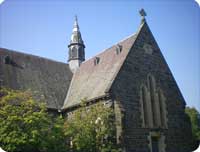 Anglican vs Catholic
Though they came from the same Christian roots founded by Jesus Christ in Judea 2000 years ago, Anglicans and Catholics have diverged to become two separate forms of Christianity.
Definition
Anglican refers to the Church of England and its related branches throughout the world.
Catholic comes from the Greek for universal. It was the first form of Christianity and claims to have kept apostolic leadership unbroken since the time of St. Peter.
Origins
The Anglican Church came into being during the Reformation. It was the brainchild of Henry VIII. He couldn’t secure a sanctioned divorce from the Catholic Church and therefore broke off to form his own sect. During the time of Elizabeth I, the Anglican Church was formalized.
The Catholic Church began as soon as Christ’s apostles began to preach after his death. In the 4th century AD, Catholicism was made the official religion of the Roman Empire. Just prior to that, the Council of Nicene codified Catholic beliefs.
Leadership
The Anglican Church does not recognize any central hierarchy that places one church or priest over all the others. This gives each individual church and region a lot of freedom to decide on policy. All Anglican churches are part of the Communion. The Archbishop of Canterbury is considered the first among equals but this does not give him authority over churches outside his region.
The Catholic Church has a fully entrenched hierarchy. At the lowest rung are the parish priests, then the bishops, arch-bishops, cardinals, and finally the Pope himself. Each level has authority over more congregations. The Pope is chosen by the cardinals and is thought to be the successor of the apostle Peter. The Pope is also thought to be infallible on matters of church doctrine.
Beliefs and Practices
Anglican priests can marry. Parishioners take communion, but believe it to be a symbolic act. The mass entails a lot of ‘smells and bells,’ as one cheeky parishioner put it.
Catholic priests must take a vow of celibacy. The same holds true for monks and nuns. Communion is believed to be accompanied by the miracle of transubstantiation. There is liberal use of incense and bell ringing in the mass.
Controversy
In recent years, the autonomy of the Anglican Church has led to conflict between more liberal branches who want to include gays and lesbians as members of the clergy and conservation branches who feel this is wrong. The Anglican Church is in danger of an irrevocable split.
Summary:
1. Anglicans and Catholics were one in the same until Henry VIII broke from the Church.
2. The Anglican Church eschews hierarchy while the Catholic Church embraces it.
3. Much of the mass is the same, but Catholics believe the bread and wine is actually the body and blood of Christ.
4. Both Churches have been weathering their own storm of controversy in recent years.
Here are some of the FAQ
More information about the Church of England vs. Catholic
While the Anglican and Catholic churches are more similar, they differ in various ways. For instance, the Catholic church embraces hierarchy in the church while the Anglican church does not. Also, Catholic priests do not marry while Anglicans do.
So, what is the definition of the Anglican church?
It is a church that relates to the episcopal Church of England in order of the practices such as communion and hierarchy.
What denomination is the church of England? After what event did the Anglican church in America stop communicating with its English counterpart?
The church of England is categorized in the protestant denomination. The Anglican church in America stopped communicating with its English counterpart after the 1775- 1783 Revolutionary war. The war led to the end of the independence of America, leading to the formation of the United States of America. Although relations resumed between the two nations, religious, social, cultural relations were not restored.
Search DifferenceBetween.net :
 Email This Post
: If you like this article or our site. Please spread the word. Share it with your friends/family.
Email This Post
: If you like this article or our site. Please spread the word. Share it with your friends/family.
115 Comments
Trackbacks
- Difference Between Baptism and Christening | Difference Between | Baptism vs Christening
- Difference Between Ireland and Northern Ireland | Difference Between | Irelvs vs Northern Irelvs


This was alright i suppose. However, in the Anglican church, we also beleive that the true Body and Blood of christ is present at communion. The Wine and bread transforms into the other elements.
For the truth, take a look at gty.org(catholic doctrine) or are catholic’s christians.
so much nonsense
My religion is not nonsense so please be quiet
Start reading. Bible and see truths
Read the Bible, see the truth? Which version of the Bible?
Why do you believe in a mythical being?
God is real. We communicate constantly. I was caught up into the third Heaven. I have experienced miracles.
Amen
Your question is SO valid.
I agree Pedro and i dont believe in calling no man on earth father but my father in heaven.
Perhaps you lack some context, I have a dad and sometimes I call him father, then some priests are referred to as ‘father’, then the pope is referred to as holy father by some. In some culture’s father may even refer to elders. Point is, clearly the word father obviously does not refer to God as in the above cases. Perhaps you are referring to the internal conflict that arises when we use the word ‘father’, even though one might know the context of the word, perhaps it may still feel a bit odd, I suppose this is simply human psychology.
I find it interesting that the uneducated will come on here and rant about how they don’t understand and then start criticizing how things are done. Instead of asking or posing the questions that they have so they may decide for themselves what they wamt to do. God didn’t give us free will for nothing. He sent Jesus to pay for the sins of the whole world, each and every person but each one has to decide for themselves if they want that or not. He won’t force anything on anyone. To the person who has said prayer is no use ….out of curiosity have you tried it. Not some blah please help me pass this test but a real from the heart show me your real? If you have I urge you to think back to that and see if perhaps God did show up and you just chose not to accept it. If you haven’t why not try it. What have you got to loose ? Prayer is a very powerful tool, and Jesus came to bridge the gap that was between us and God created by sin
Most people have no idea what. Bible says. Few are called out now.
This is delusional .Religion poisons everything..what about peace love an understading..not fairies at the bottom of the garden..The fairies are probably more real than this god nonsense..
Absolutely ❗
Beautifully put
When jesus used father he was speaking in spiritual terms. He always spoke in spiritual terms, even when asked who his mother and brothers where. We humans can’t get our head around it. We’re all spiritual beings, flesh and blood will not enter the kingdom of heaven. When jesus spoke it was in spiritual terms. John
Agreed! I’m my culture we use “father” or “mother” as a form or respect to call our elders.
Agree! There is no man on this EARTH today, that I will ever call Father. My Daddy died this year and I know that he is with our Father in Heaven today… And one day I will be there with them.. Praise The Lord!
Good for u. Maddie. Yahweh is our. Father. We call no man on earth father.
How will you know him?
I called my ther daddy and now he s in heaven
When folks take the bible literally …, so said…,
Fr. (as a title)…,
So sad.
I proudly reefer to my Priest as Fr…, but that is your right not to do so…
The Bible mandates this. No Earthly person (other than one’s biological father) should be referred to as “father”.
Wat will you tell God that day wen u die wen u called that nosense
Muslim.
Yes. Catholic and they don’t see it
Anglicans do believe that the wine and the bread are body and blood of christ
Hi. Does Anglicans Church read the KJB ..
Thanks
Darren, Not only does the Anglican Church read the King James version of the bible, it was King James, head of the Church of England, who had it commissioned. Since then, of course, due to archaeology, more accurate translations have also been commissioned. Today the KJV is only used for its beautiful language in more formal services. However, to get the best version of the bible you should learn to read Hebrew and Greek so you don’t need a translation.
No we don’t. We believe it’s symbolic not the Literal blood and flesh!
Horse feathers
I Created Ye All But Ye Fuckwits Have Somehow Turned A Conversation About Religion Into Friggin Reddit. I apologize for reality tv.
And, I hope, for your vile language.
The anglican church does not believe in either transubstantation or consubstantiation.
Do yall have adoration of the Eucharist per chance? How do yall feel about saints? Mary? Do yall say the rosary? Creed?
Just curious . I am Catholic nut Pope Francis is Not Teaching the Catholism I grew up on. So I just been checking out other religions some. So the Eucharist is not symbolic to yall, right?
Do yall have adoration of the Eucharist per chance? Google says that Adoration of the Eucharist is an hour of mental prayer. The Holy Communion companion book (written by a Bishop before 1951) I inherited from my grandmother states we should be basically thinking silent prayers the whole Eucharist. And we should work though our weekly transgressions throughout the weekend before taking Holy Communion (we do not have a formal Confession, confessions are personal prayers). But no mention of an Adoration.
How do yall feel about saints? We do not have saints like Catholics do. We name our churches things like “Saint Paul’s” but that’s about it, in my experience. We never refer to Paul as Saint Paul.
Mary? I understand Mary is kind of worshipped under the Holy Trinity in a heirarchy of sorts, we don’t do that. For the most part, she only comes up at Christmas, maybe Easter.
Do yall say the rosary? No. I’ve seen rarely some people have prayer beads to kind of remind them of the people in their lives while they pray. I used to be fascinated by rosaries and prayer beads.
Creed? We say the Apostle’s Creed during the Eucharist. Not sure if it’s the same as yours.
Communion? Symbolic, not literal. At most it becomes Jesus’s divine essence after the blessing, but not his blood and flesh.
Pope? We don’t have such a strict heirarchy. The highest are the archbishops. The “first among equals” is the Archbishop of Canterbury. But he doesn’t lead the same way as the Pope.
That’s not true . The bread and wine are not changed in the Anglican communion service.Article 28 states in the 2nd paragraph.
Transubstantiation , or the change of the substance of Bread and Wine in the Supper of the Lord, cannot be proved by Holy Writ; but is repugnant tithe plain words of Scripture, overthroweth the nature of a Sacrament , and hath given occasion to many superstitions.
The Body of Christ is given, taken and eaten, in the Supper, only after an heavenly and spiritual manner. And the mean whereby the Body of Christ is received and eaten in the Supper is Faith.
Jesus said on the last Souper, Take, this is My body, drink this is My blood..doing this to remember My. The wine and bread is really the body and blood from our Lord Jesus Christ,Son of God and God. One God in three identities. You can’t discussion about this. Wen you don’t believe it, U have doubt about your Christianity?
The Anglican church does NOT believe in Transubstantiation.
What are the differences doctrine between the Anglican Church and the Roman Catholic doctrine Church?
“What are the differences doctrine between the Anglican Church and the Roman Catholic doctrine Church?”
There is very little difference between Anglican & Roman Catholics. Most enthusiasts on both sides trot out minor differences I.E. Transubstantiation, Immaculate Conception Marianism in General. But in fact these are minor differences and rely simply on wishful thinking! In fact on Transubstantiation ? This is a relatively new idea, being a product of the first millenium, whilst the British Church teaches the Biblical Doctrine of the Real Presence, both claim Christ is present at the Eucharist, the Romanists tell us how it is managed, whilst the Anglicans say they haven’t a clue, but accept Christ at His word! I.E. “This is my Body,.” As for the Immaculate Conception, the British Church denies it, but accepts the Doctrine of the Councils that Mary was Ever Virgin,and All Holy and Immaculate!
The main difference between the two are the complimentary doctrines of Papal Jurisdiction and Papal Infallibility! As there is nothing in either Christ’s Revelation, Scripture or The Seven Ecumenical Councils how can we accept these preposterous doctrines.
There is another wedge between us, at one time it assumed enormous proportions, but now seems to have lost it’s attraction and that is the Council of Trent.
This was a ‘Robber Council,’ held in 1545/1564. It was here that a small number of Catholic Bishops surrendered their responsibilities on to the shoulders of the Papacy and brought out an illegal creed,. It was here that the pope acheived his dream of Papal Jurisdiction.
Re: the Immaculate Conception. I am afraid that the above poster has it confused with the Virgin Birth. The Immaculate Conception means that Mary was conceived and was born without original sin on her soul. The theory of the Virgin Birth means that Mary conceived her son, Jesus Christ, without having had intercourse. Many people get these mixed up. However, if you want to argue a point of religious belief, it would be advisable to make certain you have your facts correct.
Stasia.
I find the above poster’s contribution and comments interesting, how-and-ever, where is her proof?
The Immaculate Conception of Mary is an addition to the Faith of the ,One, Holy and Apostolic Catholic Church. It goes against the Biblical Injunction of the great Apostle, S.Paul.
Catholic teaching on the lady Mary tells us that she is the ‘Mother of God,’ and defined as the ‘Theotokos’. (1st, Eph. 431 AD.)
The Second Ephesus defined the Lady Mary as ,’Spotless and Immaculate’ (787 AD. )
whilst the Second Council of Constantinople,(381 AD. referred to her as, ‘Mary, Ever Virgin.’
This is the belief of the Catholic Church through the medium of her bench of Bishops , world wide, guided by the Holy Ghost in Council.
Arguing over ‘facts’ when discussing theology is a bit silly is it not? Surely you’re all discussing matters of faith? As a confused non-believer, i really admire believers of any faith, but struggle to understand how you can argue with each other over unproven ideas?
Nice one dear! I want to ask is Mary really born without sin? I need biblical reference.
“Hail full of grace.” (The angel’s greeting to the Blessed Mother). She can’t be full of grace if she has any taint of sin. No other human being is greeted this way by an angelic person in all of sacred scripture.
“The power of the most high will overshadow you…” the same language used to discribe the shakina around Mt. Sinai when Moses was given God’s word. To be placed in the Ark, which no man could touch.
The Ark was God’s throne, upon which rested the Word surrounded by the Hoky Spirit. Mary is th new ark, the word in her womb surrounded within and without with the Holy Spirit which prepares her for this role from the first moment of her conception
In every branch of Christendom with apostolic foundation the same understanding about Mary being sinless from her conception is held as part of sacred tradition and the deposit of faith.
The only time that this began to be denied was the Reformation.
How can this be true when the Bible says that the only sinless person to walk the earth was Christ Jesus? This puts Mary on equal footing with Christ-not possible! Also couldn’t “full of Grace” mean she would be full of the Holy Spirit when she is with child(the child being Christ himself? That is the grace that she is receiving through bearing Him-not from being without sin! We all receive God’s Grace!
Adam and Eve were walking the earth without sin for a time.
Excellently articulate and Svripturally accurate.
Bible says all sin and fall short. Yahshua Christ is the only sinless one to walk earth. Mary is. Not sinless
Lol. That was too funny but pathetic
Stasia you are correct.
LOL You sound like a vicar who still uses terms like “popish.” I imagine you think all these similar doctrines just popped out whole at the birthday of the Church.
To say the differences between Anglicanism and Romanism is “trivial” is crazy to me. As an Anglican, I find the difference between ancient christian truth and made up mythology extremely important to be a healthy thinking person and free from dictatorial control. I belong to and Anglo-Catholic parish, and enjoy the pomp and aesthetics in worship, but the reasons behind the ceramonies and theology is extremely different from Roman Catholic dogma. This basic difference is very central to modern religious thinking and a basic view of human, historical reality. To keep it real, open and truthful is central to Anglican thinking and that is what is important to keep in mind. Anglicans can change and grow over time and not just go further out on the same old broken limbs of dogma.
Of course they can grow and change. Considering it is a religion that has its roots in Roman Catholic IE Christian beliefs it was born out of people not liking those rules, ( like divorce) so they (royalty) decided to change the “rules” to suit themselves. Just like every other religion. Basically ALL RELIGIONS are about control!
Like Gay priest?
What! You mean you make it up as you go along.
hello
thanks very much for this difference between anglican and catholic.this is a concept that i have always been disturbing me.i am now very clear about it.i can go and explain it to others.thanks; i am very grateful.
Thank you so much for posting this. totally informative 🙂
I’m an Anglican and we believe that Christ is present in the Eucharist similarly in the same way Greek Orthodox believe. I resent the idea that one would think we’d believe it is just a “symbol.”
We do not believe in Transubstantiation but we believe that Christ’s body is present in the communion. In other words, Catholic’s believe that the bread becomes Jesus, Anglicans sort of believe that Jesus becomes bread. ha-ha
You can find just as much adoration of the sacrament in the Anglican church, especially in certain dioceses within the Episcopal Church USA.
Baptists believe in symbolism/ memorialism
Catholics believe in transubstantiation
Lutherans believe in the real presence (some might say consubstantiation)
Good explanation – thanks for posting.
The bias in this article is far too obvious. This piece should be taken with a grain of salt. This piece doesn’t address competing views of the nature of primacy in the church, the evolution of the papacy during the middle ages, the issues that the Orthodox also had with the papacy and the Bishop of Rome’s claims to universal jurisdiction. This article argues the Roman view that assumes the early church believed in papal infallibility, the universal jurisidiction of the Bishop of Rome, etc. These beliefs were evolved and developed by those who would come to be called “Roman Catholics”, a form of Christianity revolving around the absolute temporal power acquired by the Bishop of Rome over time, beliefs developed long after the apostles and early Christians were dead and gone. Both Anglicans and Orthodox have taken the more traditional views of primacy in the church, where primacy was more organic and based on recognition by locally autonomous churches, and didn’t revolve around a cult of personality surrounding the Bishop of Rome (again, a novelty of the notoriously corrupt papacy of the middle ages which was frighteningly concerned with temporal power). The See of Rome was not the only See of Christianity, there were also other patriarchates (that the Orthodox remained loyal to after the break with the Romanists), which exercised their own authority in governing the Christian church. Of course, this article leaves all of this, an enormous part of Christian history, out of the picture, so as to put up some illusion that the Roman Catholic model of church governance was always the Christian model of governance, when in fact, it wasn’t and is an invention of the Ultramontanists of the middle ages.
In the above article,”Anglican and Catholic Differences,” there is a great deal of misunderstanding. The Catholic Church is the Body of Christ! To become a member we must receive a valid baptism, i.e. by water and by words. It is this, right belief, ,( the complete apostolic succession,) that enables us to become ,”Members of Christ and Children of God and thus Catholics. It is this right belief through the Revelation of Christ once made to the Saints, Recorded in Scripture and completed , interpreted and explained by the Holy Fathers through the Seven Ecumenical Councils, that cause the Church in England to remain Catholic after a history of some two thousand years . I should imagine that those people who reject Christ’s revelation or indeed add to it, (See Paul’s Epistles,) make up the protestant Element, but, Anglicans hold to the ancient faith, if they don’t surely they are no longer Anglican!
well, Anglican also believe that the bread and wine represent the body and blood of the Jesus Christ. We do this in remembrance of Jesus. It is not only catholic believe in this, but so do we.
great! 😀
Another couple of differences that occurred to me are:
– the RCC is distributed worldwide, and has several millions adherents everywhere (with the exception of Orthodox Easter Europe and Islamic Countries in Asia and Africa), while the Anglican Community is – for obvious reasons – concentrated in former colonies of the current UK.
The RCC appears to be, in this regard, way much more universal (i.e. “catholic”) than its ‘Anglo-‘ counterpart.
– The mother church of the Anglican Community, the Church of England, is simply the former Church in England, tamed by a monarch that, despite being granted the title of Fidei Defensor by a Pope, decided that he was better off with a docile and obedient religious tool instead of one taking orders from far away Rome. Ever since, the CoE has been ‘Established’, that is, a state church ruled by the central government (be it the Monarch or the Parliament). Let’s not forget that the CoE is the one of the few state churches left in the western world (elsewhere no one has heard of bishops sitting in the parliament since the Middle Ages), and – according to statistics on mass attendance in the UK – exists mainly for the purpose of providing pageantry.
Ps. The primacy of the See of Rome is accepted by virtually all the other major denominations (Orthodox, Anglican…, much less by real Protestants), while the only ones pushing for a plenitude of jurisdiction of the Bishop of Rome on the whole Christendom are the Roman Catholics.
I guess Brazil, Argentina, Japan and Senegal are all former British colonies
To start with the article, ‘The difference between Anglican & Catholic, is based on a false premise. Anglicans are Catholics and arguably of an earlier provenance than Rome! To be a Catholic, we must have under gone Triune Baptism, that is by water and by word and have been taught the Revelation of Christ once made to the saints, entered in to scripture, explained ,interpreted and completed by the Holy Fathers in the Seven Ecumenical Councils. Our faith is based on this, can Rome claim more than this? Can it even claim this? In fact the Roman position is based on the Council of Trent, where Catholic Bishops from Northern Europe abandoned their traditional teachings and adopted the new teachings of that Council and the new creed it brought out inspite of the prohibitions of Niceae!
The claim that the Church in England came in to being during the Reformation, is rubbish. The Catholic Church has been present in Britain since Roman times, our bishops were present at the Council of Nice,(325 AD.). The Celts, (Albanicus the Wise, the well known Historian,) claimed that the Church was here in 37 Ad. The Roman ,or Latin Councils of the West, gave pre-eminence to the English Church on account of its provenance at the hand of S.Joseph of Arimathea. There are reports from several worthies of the early church on the intervention of apostles in this country! In, or around, 607AD, the British bishops rebuked Augustine the Monk, for interfering in Church matters in this country! In 750 AD, (App.) Baeda the Monk, in his History referred to the Ecclesia Anglicana, which is usually translated, Church of the English. In 1215 at Runnymede, in the Great Charter the scribes again named the Church in England as Ecclesia Anglicana. During the middle ages, in correspondence with the continental churches, the term was ,
‘Sainte Eglise,d’angleterre, which according to scholars was interpreted as, ‘The Holy Church of the English.” The name of the Roman Church at this time was the Suburbicarian Church of Rome, at the Council of Trent to reflect its new status it was changed to, ‘The Holy Roman Church’. Note the papal letter or proclamations put out by Rome even as late as last year.
Regarding ,‘Establishment,’? The writer has either not thought the matter out, or his study is of a shallow nature. For some 800 years the Bishop of Rome was the monarch, or overlord of most of Northern Italy. He was also a Prelate within the catholic Church, are we to understand that he as monarch and ruler played no part in the religious life of his subjects? In fact, the Catholic Church had played a major role in English Politics for about a thousand years, with joint Synods, between the Laity and Clerics well in to the Saxon times.
Authority in the Anglican Church is based on Revelation, Scripture and Councils just as it is in Orthodoxy. Whilst the Roman Church reset itself at the Council of Trent and its Bishops renounced their responsibilities and abandoned their duties on to the shoulders of the Bishop of Rome, assumed the name ,’Holy Roman Church,’ and became a catholic sect!
The Primacy of the See of Rome?
This ,‘Primacy,” was given by the Church to two prelates within the Church at that time; in the West, given to the Bishop of Rome because, being the parish priest of the Emperor he had become a virtual civil servant, serving in that position, the pope at one time repossessed two houses at the instigation of the Roman State. When the Capitol of the Empire moved east to Constantinople, the Bishop of that See was was promoted to Primate of the East! They were political moves to please the Emperors!
As for the papal claims of Jurisdiction and Infallibility. It is to be noted that papal jurisdiction was not achieved till the Council of Trent and then only by very suspect methods, in fact the eastern part of the Church separated in 1054 after strong protests against this claim. All during the middle ages, there was a vicious struggle between the Councilist, or traditionalists and the supporters of the Vatican. In theory it could be claimed that the former triumphed at the various councils, unfortunately, they had no power to enforce their position relying on the various monarchs, who were reluctant to interfere with another ruler, lest they destablised the principle of kingship.
Thank you for a very learned and informative response.
Difference with respect to Holy Eucharist described in article is wrong…Anglicans don’t believe in transubstantiation, but do believe in “Real Pressence.” HE is not just a symbolic act, as in most Protestant churches.
You’r in error friend, a Vicar is a territorial position and I’m a simple parish priest and a retired one at that!
The term ,’popish,’ is perfectly apposite in this usage because it is concerning the pope! I can well see why the Roman Church dislikes this, because it highlights a terrible failing in that Communion, but that is not my concern. In the Roman Church everything is subject to the will of the Bishop of Rome! Is that not so? The Revelation of Christ, Scripture and Holy Tradition are ignored, to say the least, by the Roman, (Trentist,) Church in their pursuit of this doctrine. How-and-ever, the power and authority claimed by Rome is not Catholic, it has no place in Christ’s Revelation and is simply an addition to Catholic Doctrine. Rejecting S.Paul’s injunctions I might add.
Amen!
Awomen.
The Roman Catholic church has done a fabulous job of masquerading as the Church that Jesus founded upon the apostles. It is not. It contains elements of it, but it is clear that much of its doctrines and dogmas have no root in early Christian history.
I see here a lot of bias and misunderstanding of the office of the papacy. I think a good place to start is to read John Henry Newmans writings on the development of christian doctrine. Someone in a post earlier made a statement that did not make sense that the catholic church contains only elements of the early church. This is true of all of us. Whether we like it or not doctrine, liturgy, and teaching develops. Are understanding of events places or dogma can deepen or increase the mystery. The Catholic Church and the orthodox have been around in various developed forms depending on the need of the age. What makes a church historical is rooted in apostolic succession, teaching, church father’s, proper leadership of the three fold office, following the scripture canon put together in the 4th century, truly catholic or universal, and administering the sacraments and a healthy believe in the real presence.
The Catholic Church is the Body of Christ, here on earth and we enter by baptism.I agree!
However, Christ brought us the Gospel by means of His Revelation (Ep., Jude.) Which we are to contend for! (Jude.) For Catholics, this doesn’t mean the question is thrown open for interested folk to ‘have ago,’ as it were! The major components of the Gospel or Revelation were decided by the Holy fathers, of the first Centuries,Revealed by Christ and interpreted by the Bishop’s of the Seven Councils.
Within the Church Catholique, there has been a steady tradition from the beginning that the first ideas were the best, Tertullian, Vincent of Lerins, we’re talking about Holy Tradition.The basic thread of catholicism has been woven, it is the modern errors that need putting aright.
The strength of the Church is that it is guided by the Holy Ghost the Comforter, as S. James, the Brother of Christ finished the Jerusalem Council, ‘It has seemed good to the Holy Ghost and to us’. Apostolic Succession is not just a matter of mechanical succession of Orders, it is also a matter of the Succession of the Apostolic Faith, revealed by Christ to the Apostles, written in to scripture and interpreted,explained and completed by the Bishops with the help of the Comforter.
The eucharist is not “symbolic” in the Anglican tradition. We do not get involved in transfiguration as the Catholics do, but we believe the bread and wine are “sanctified to be the body and blood” by the priest. Once they are sanctified they are accorded special care. No drops or crumbs are allowed to the sewer or left out alone. Here is a web site that may be mroe helpful in describing the differences in the Catholic and Anglican traditions.
http://comforterchurch.org/about/anglican-roman-catholic-differences/
very good discussion. I am attending catholic services but don’t see scripturally the Marian beliefs or her assumption also the infallibility of the pope or the rule of celibacy all of these are man made doctrines,to say that one church has all truth is wrong and the catholic church seems to promote this, I am not knocking it only saying that if they based their doctrine on scripture instead of mens doctrine things would turn out differently
After being raised Episcopalian [USA] I converted to Catholicism while teaching parochial school then later Orthodoxy. Persons raised Anglican overwhelmingly self identify as Protestant. Furthermore, the early CofE was clearly reformed Protestant. Globally schismatic Anglo-Catholics seeking reunion with Rome as an Anglican rite number perhaps half a million’ clearly the genuine catholic party in Anglicanism is not very large. It is also evident that this loosely confederated group of churches is in continuing long term decline and will leave only a small number of Evangelical survivors by mid ‘century. It is also true that the RC church is in steep decline in Europe and really the entire developed world, as well as Latin America. And, just as there have been Catholic revivals in Anglicanism there has been a good deal of protestantizing in Catholicism as well. Although this is a complicated subject the notion that the CofE is a national Catholic Church like the Armenian Apostolic Church strikes me as disingenuous, especially considering the extremely limited number of Anglican monastics [approx. 2,500 globally]. The two groups may share a similar fate though as the modernist heresy morphs into an increasing realization of the ahistorical status of the gospels which were actually gnostic fabrications reworked from Egyptian mythology by the mystery cults of the ancient Mediterranean world as explained by former Anglican priest Tom Harpur in his book “The Pagan Christ”. A similar book “The Jesus Mysteries” was written by Freke & Gandy in England. Harpur is a professor at the University of Toronto.
ONE GOD ! Father, Son & Holy Spirit. All glory, praise and honor be His forever. Undeniable is His love, mercy, fidelity and patience, particularly with us bickering sinners.
Born the baby of six into an Irish Catholic family. I did not enjoy my first 30 years of Catholicism. However, as I started to have my own five babies, it proved to be a wonderful way to worship. I find it so silly that people argue about the differences in Anglican and Catholic. Who really cares? And/or, why do you care? Point is this:
If you find yourself a part of a religion,
Part of a church,
that is loving and spreads love,……
then all is well.
It doesn’t matter what you call it,…….
Mary – please make sure those babies are Catholic. It might be the only way to reach those nice old vicars who insist on believing the Catholic Church just sits around making this stuff up!
You share my outlook on faith. God bless
Thank you Mary. I picture Jesus knowing that he would die wanting the apostles to remember his message. Bread and wine were the meal of the time taken every day what better way for them to regularly remember than to ask them to remember him at every meal. No need for transubstantiation, or Holy presence just remembering Christ and his last message: Love one another even as I have loved you that others may see that you are one of mine. So grace before meals and start behaving as He wished and stop squabbling over man-made interpretations and fighting for personal importance.
If it is almost the same then why not join back…. What are protestants protesting for now ?
What i want to point is below…
1 John ch 2 vs 11
But he who hates his brother is in darkness and walks in darkness, and does not know where he is going, because the darkness has blinded his eyes.
All is well
Firstly, many Anglicans regard the Church of England as the Catholic Church in England. It didn’t start with Henry VIII but in the seventh century with Augustine of Canterbury. Henry’s separation didn’t change the catholicity of the Church, and there is a whole literature about this from the sixteenth and seventeenth centuries. Secondly, Anglicans typically have believe in the real presence of Christ in the Eucharist. Since the nineteenth century many speak of transubstantiation. There are NO significant theological differences between the churches. There are also no differences in structure, except that the authority of the pope isn’t recognised.
While all Christan based world is fighting among themselves regarding belief differences who is right and who is wrong,the others will take over who have the same direction in believes .People let’s spread positive energy and love,that is all we need.We are all on a tourist visa on earth,once it expires all we take is our soul to God.All materialism remains on earth in all different forms and shapes as they were there for thousands of years.We are just in transit…
It’s funny you call your father father, father means simply teacher. Narrow-minded Bible believers!!!!
The photograph at the top of this article looks like
Saint Michael and all Angels Observatory Cape Town
The nearest to Heaven on Earth
Pray for the repose of the soul of Fr David Binns former and much loved
Rector
An Old Bergie
Why would you pray for anything. If god is god, then god is in charge and does not need bozo human prayer
All thru. Bible we are told to pray. Our communication with. Yahweh. Read the Bible before u make yourself look stupid
The vital question is salvation of the soul. No matter how the Roman Catholic Church will like to call it but each time the mass is offered the sacrifice of Christ is repeated. When Christ died on the cross he said it is finished. To the Catholic it isn’t finished. Christ sacrifice took place once for all time upon the cross and is never to be repeated because it paid the full penalty for sin. That the mass is Christ being sacrificed over and over again on Catholic altars is the heart of catholism with the hope of eventual release from purgatory. I want no part of this because it is unscriptural
It amazes me how modern Christians still believe in human sacrifice( Christ) for their connection to a god. Just like the Incas and other human sacrifice religions. Amazing how educated people can become so deluded and never really understand what they base their religion on.
I don’t know what is true and what is not…sounds like y’all disagree just to disagree. Mitchell and Vanessa have it right! Just be kind to each other and all is well, isn’t that the whole point!?
Thank you You are the only one so far to speak and portray what it means to love Jesus. I dont understand why there needs to be a discussion so much on the differences in the negative why not focus on what we all strive towards and that is serving and loving our Lord. Pride has no place within Gods children. Nor does feeling offended. Its all pride. We can learn alot from children they care not what religion you are nor your race nor you position they love and love in return without judgement and this is who the kingdom of God belongs to. So let us be like them.
Is it not better to be a good protestant rather then a bad catholic and visa versa
There’s very little different between Anglican, Catholic and Eastern Orthodox
Same sh different toilet
Let’s face it- the Pope is fallible, as is the Roman Catholic Church. The history of the papacy is frought of bribery, murder, incest, cruelty to other religions, torture and more sex scandals than a person can count.
Yes the Catholic Church has made a mountain of mistakes or I should say Catholic priests and bishops. And we read often about these sins of praise quite often in the local papers what surprised me was when I was doing research on it one day I came across several articles where it was specific to the protestant religion stating that if you combined Catholicism and all the other religions and the mistakes they’ve made And since they’ve committed they would still not all equal the number of mistakes and sins that the protestant religion has made.
So how is that possible when we rarely read of a story similar to Catholic priests fondling altar boys (as an example) In the protestant church?
Maybe properly the question should be the difference between Anglican and Roman Catholic. Anglicans like most Protestants recognise themselves as Catholic but NOT Roman Catholic.
The Anglican Communion and other Anglican Churches including the Methodists normally are all descended from the Church of England and it’s breakaway factions. They typically use certain pre-Reformation/Medieval Roman Catholic liturgical practices but adhere to Reformed (Calvinist/Arminian) doctrines.
Roman Catholics typically assume that the Church of England broke away from England because of divorce rather than the fact that the Pope excommunicated Henry VIII and threatened a Crusade against him. Henry was no Harold Godwinson (another English King removed by Papal decree) however and he took action. He aligned himself with the Pope’s Protestant enemies and they reformed the Church of England on the sly even when Henry tried to check them.
So the Pope lost England not the other way round.
And Henry sought an annulment not divorce. Any good Roman Catholic should recognise the difference
There is only one true Church that Jesus created. It is man that broke away from the one true church to make it convenient for themselves.
Your understanding of the Anglican split from Rome is woefully simply and quite ignorant. The pope refused an annulment to Henry because he was politically captive to the emperor who happen to be nephew of Catherine of Aragon, the wife of Henry. Henry actually had the qualifications for the annulment, but the pope refused due for political reason. Henry broke away from the jurisdiction of the bishop of Rome, he did not break from the catholic faith. You have accepted the false narrative and wrong doctrine that the the Church of Rome is the Catholic Church. Also the Anglican Church came under Rome again under Henry granddaughter Mary. After came Elizabeth who brought reforms into the church. She did not break from Rome, rome excommuncated her and by defacto the Church of England. Thus the split from Rome finally was initiated by Rome.
Thanks for posting,some of your points are very educative and important for someone life. We need to know God better.
Christ’s message was love one another even as I have loved you that others may see that you are one of mine.
He prepared us for after his departure by saying when you eat (take bread and wine ) remember me. So remember his teaching not only in communion but at home.
Hi I am part Jewish and part Irish, I didn’t know what church to go to so I prayed, and was told “I am everywhere my child where love is I am there! “Im not worried anymore.
people really be out here writing essays huh
I don’t think any thing is wrong with the word Father, because we Catholic only use it in the sense that they are our leaders only and that’s only.
Your article states that Anglicans believe that the bread and wine of communion is “symbolic”, not really the Body and Blood of Christ. That is wrong; Anglicans DO believe that. Unlike Roman Catholics however, Anglicans don’t call use the term “transubstantiation” to define it. They believe that the miracle of the Eucharist can’t be defined – that it’s a mystery, and Orthodox Christians believe the same. For Catholics, the bread and wine at Mass become flesh and blood despite the senses still perceiving bread and wine. For Anglicans, the bread and wine remain bread and wine, but also become the Body and Blood of Christ.
You are misinformed and teaching a repeated lie about the first Christian church, other than Jesus’s. It is not really known!!!! Nor whether that it was James or Peter…first. Only opinions by what little written. And another thing, I dare to say that you’ve never actually sat down to do any serious personal investigations along side interpreting the ancient scriptures for yourself. I know you mean well, but you do more harm than good in this particular article. Whether you’re an overly proud whatever else, beware! the true faith, over the centuries, in one way or another has unfortunately been put through other grapevines other than Jesus Christ, or broken off and put into secrecy until the called one can claim the branch. The real one, for opening up eyes and bringing out secrets , will be grafted back in!!!
No doubt the Christian faith is a good one for all those who seek the wisdom of divinity. It does seem however, that the parallels between at least a score of other ancient mystical figures in terms of miracles and significant events points to a continuation of traditions and teachings in the form of a monotheistic person. Perhaps this was an attempt to wed Judaism to ancient paganism. It is also clear that where one tradition stops the other tradition takes over. I believe in Jesus. However I believe that he is a human construct rather than a historical person. Regardless of which, the thoughts and prayers of people throughout time could, I believe, create a divine person simply by will.