
 Ontology vs Epistemology
Ontology and Epistemology are probably the most complex terms that one might come across while studying philosophy. Ontology and Epistemology are branches of philosophy. Let us try and simplify these complex topics.
Ontology
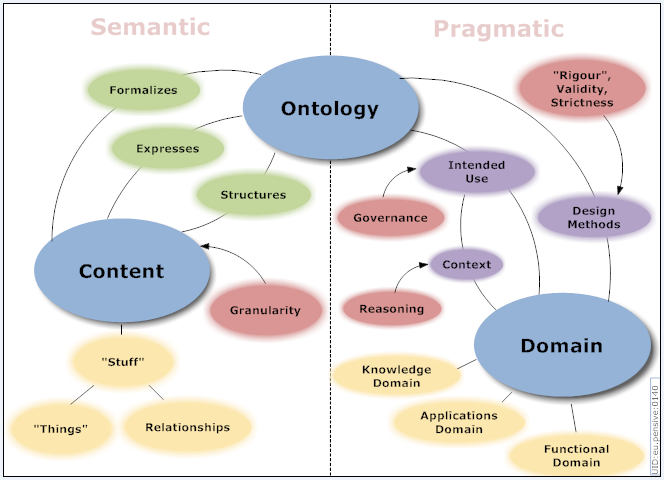
The word ontology is derived from the Greek words ‘ontos’ which means being and ‘logos’ which means study. It tries to pin point things around us that actually exist. It is the study of the nature of being or becoming existence and their differences and similarities. It tries to answer questions that begin with ‘What’. The scope of ontology can be generalised from philosophy to other fields like medicine, information science or even advanced physics. Ontology helps us to understand questions like what is God, what is a disease, what happens after death, what is artificial intelligence etc. The field is dedicated towards understanding whether things exist or don’t exist. Ontology also studies how various existing entities can be grouped together on the basis of similar characteristics and it tries to find out those similarities. The field also tries to find a relation between the objects that exist. People who deal in ontology try to understand why a particular thing occurs how it is related to other things.
Epistemology
This is one of the core branches of philosophy which deals with the aspect of procuring knowledge. It is more concerned with the natural sources and scope and limits of knowledge. Epistemology is also derived from the Greek word ‘episteme’ meaning knowledge and ‘logos’ means study. This branch of philosophy aims at discovering the true meaning of knowledge.
The branch is divided into two parts:
-
Nature of knowledge: This tries to explain what is meant when a person says he knows about something or event or when he says he doesn’t know about a particular thing.
-
Limits of knowledge: through this researchers try to define the scope of knowledge. They want to know if knowledge is limitless. Can we know everything or there are certain limitations to what we can know.
According to epistemology, there are different types of knowledge.
Empirical knowledge is gained through prior experience. A person states a fact based on his previous experience or encounters related to a particular topic. For example when he says that fire is hot or ice is cold, it is because of his own experience. Whereas non empirical knowledge is based reasoning. When a person says Antarctica is cold he reasons that by saying regions near the south-pole get less sunlight and hence they are cold. Propositional knowledge is when a person knows facts about different fields. Individual knowledge is based on what one person claims to know. Collective knowledge is based on what a particular community of people know. Epistemology encompasses all these types of knowledge.
Epistemology believes that knowledge is a mental state. It exists in one’s mind. If a person doesn’t believe that a particular thing exists then he cannot be knowledgeable about it. The belief has to be true and only then will it be considered as knowledge. It has to be factual and justified by sound reasoning before it is considered as knowledge. Evidence and reasoning are a must to acquire knowledge. Facts based on misinformation or just lucky guesses cannot be construed as knowledge.
To wrap up we can say that ontology tries to find out what is there in the universe and epistemology finds out ways to know what exists in the universe.
- Difference Between Flu and Fever - September 2, 2015
- Difference Between Haemoglobin and Iron - July 10, 2015
- Difference between Purpura and Ecchymosis - July 2, 2015
In your opening paragraph you propose that there is no clear definition of “ontology”. This is insultingly false; the word, as do most words, and more to the point, ALL words utilized in classically derived western philosophy, has a clear definition, unambiguous albeit subtly nuanced, which is easily accessed by anyone with a third grade education and a passing familiarity with how dictionaries function.
Your article’s author then seems to propose the argument that if others use words that one does not understand, that one is somehow at liberty to use words inaccurately, justified by sentiment, to mean whatever the fuck one feels, rather than thinks, or ultimately, and most consequentially, what one knows.
That you claim the implicit mission of your url, yet open this particular page by suggesting that no one really knows what words mean, and thus it is implicitly inconsequential if we all shoot our mouths off without actually knowing not merely what the fuck one is talking about, but what the terminology one utilizes in doing so actually contains as semantic payload, is, to put it weakly, ironic.
Language is far to important a human achievement to be allowed to regress to the point of “but what I feel when I say that is actually this other thing” points of view being considered valid arguments. That the editorial people, policy, interns or even fucking bots behind this site let’s nonsense of this type slide diminishes everyone, especially those who might come to your site looking for actual answers.
Reply
*too
Reply
That’s not much of a rebuttal. Appeal to typos fallacy is what I like to call that one.
Reply
It’s always enjoying to me to read people attempting to ruin other’s views, but using plain fallacies in their own words!
The attempt to point out perceived ambiguity of the way this article is set to prose but using ambiguous terms – “fuck” – in one instance, in place of a term -“anything” – is the sure sign of having ambivalence to precise terms to convey accurate idea concepts.
Sadly, the “educated” mind of this day is deficient in any form of precision on thought, word, impart, and clarity of understanding, for understanding is poo pooed in education systems of today, in favor of the false concept that right and wrong have no universal definition.
A patently false assumption, due to the simple fact that life has no death, only transformation. If life had an end, then it cannot exist in any form.
Reply
You third paragraph delivers a wrong message,,maybe you could, think a while longer then write what you want to say ,,read it back to yourself if your happy with that ,,then post ,, your not happy ,, try again ,,
Reply
YOU: The word ontology is derived from the Greek words ‘ontos’ which means being and ‘logos’ which means study. It tries to pin point things around us that actually exist.
ME: Ontology is the study of being and therefore not the study of things except as to their being. For example, if a thing were red and you studied that you would be studying color not ontology unless you were studying what the being of color was. Nor is ontology limited to things. Relationships, numbers… there are many examples of being that is not things.
YOU: It tries to answer questions that begin with ‘What’.
ME: Questions that begin with “what” except those dealing directly with being are not ontology. When you study what is you are studying nature. At any time you are free to turn your attention from “what” something is to the fact “that” it is. Then you begin to study ontology. Physics is not metaphysics, nature is not supernatural, sensory is not extrasensory.
YOU: The scope of ontology can be generalised from philosophy to other fields like medicine, information science or even advanced physics.
ME: You cannot generalize from philosophy to other fields. In fact philosophy is the most general field and all other fields specialize. But ontology is not just the generalization of nature. It involves a leap beyond nature to existence or being.
YOU: Ontology helps us to understand questions like what is God, what is a disease, what happens after death, what is artificial intelligence etc.
ME: The first is theology not ontology, the second is medicine not ontology, the third assumes there is something that happens after death which is a kind of contradiction in terms for if something happens after death then death has not yet occurred. You need to understand death and time better. The last is computer science not ontology.
YOU: Ontology also studies how various existing entities can be grouped together on the basis of similar characteristics and it tries to find out those similarities.
ME: That is taxonomy and it is not necessarily ontology. For example in biology there is a taxonomy of life that includes a description of the various kingdoms phylum and species etc. That is not ontology.
YOU: The field also tries to find a relation between the objects that exist. People who deal in ontology try to understand why a particular thing occurs how it is related to other things.
ME: The fact that the moon orbits the earth is a relation of position between the too but that is a natural physical relationship not an ontological one.
You really have not even an undergraduate understanding of ontology. Have you ever taken even one good course in it? If not you should not confuse people like this.
Reply
*two
Reply
Thank you for taking time to clarify this topic! 🙂
Reply